
Why Food Blog RPMs Rise and Fall With the Seasons
Author

Want to see more of my creations?
Tell Google you want to see more of my creations in your search results.
A lower RPM does not automatically mean something is wrong with your food blog. Ad revenue is seasonal because advertisers change how aggressively they buy inventory throughout the year, and that affects what each 1,000 pageviews earns.
More articles you'll love
 How to Add Affiliate Links to Existing Content Without Sounding Salesy
 Best Content Analytics Tools for Creators Who Need Better Topic Ideas
 How Content Creators Can Add Holiday Revenue Streams Without Starting From Scratch
 Digital Products You Can Make From Content You Already Publish
 Creator Media Kit Checklist: What Brands Actually Need to See
For food creators, the key is to separate normal market swings from issues you can actually fix. Once you know the yearly rhythm, you can plan content around demand instead of treating every January dashboard dip like a crisis.
RPM follows advertiser demand, not just your traffic
Page RPM is the revenue earned per 1,000 pageviews. A simple way to calculate it is total ad revenue divided by pageviews, then multiplied by 1,000. That means two months with similar traffic can still produce very different revenue. Source
Advertisers bid for impressions based on their campaigns, budgets, and what consumers are likely to buy. When more advertisers compete for the same audience, bids tend to rise. When spending eases, RPM can fall even if your recipes are still useful, your site is healthy, and your traffic is steady.
This is why it helps to review three numbers together: pageviews, RPM, and total revenue. Looking at revenue alone can make a seasonal RPM shift feel like a content problem when it is really a broader advertising cycle.
- Traffic tells you how many opportunities you had to earn.
- RPM tells you how valuable those pageviews were to advertisers.
- Total revenue shows the combined result.
- Comparing the same month year over year is usually more useful than comparing January with December.
The typical annual pattern for food blog ads
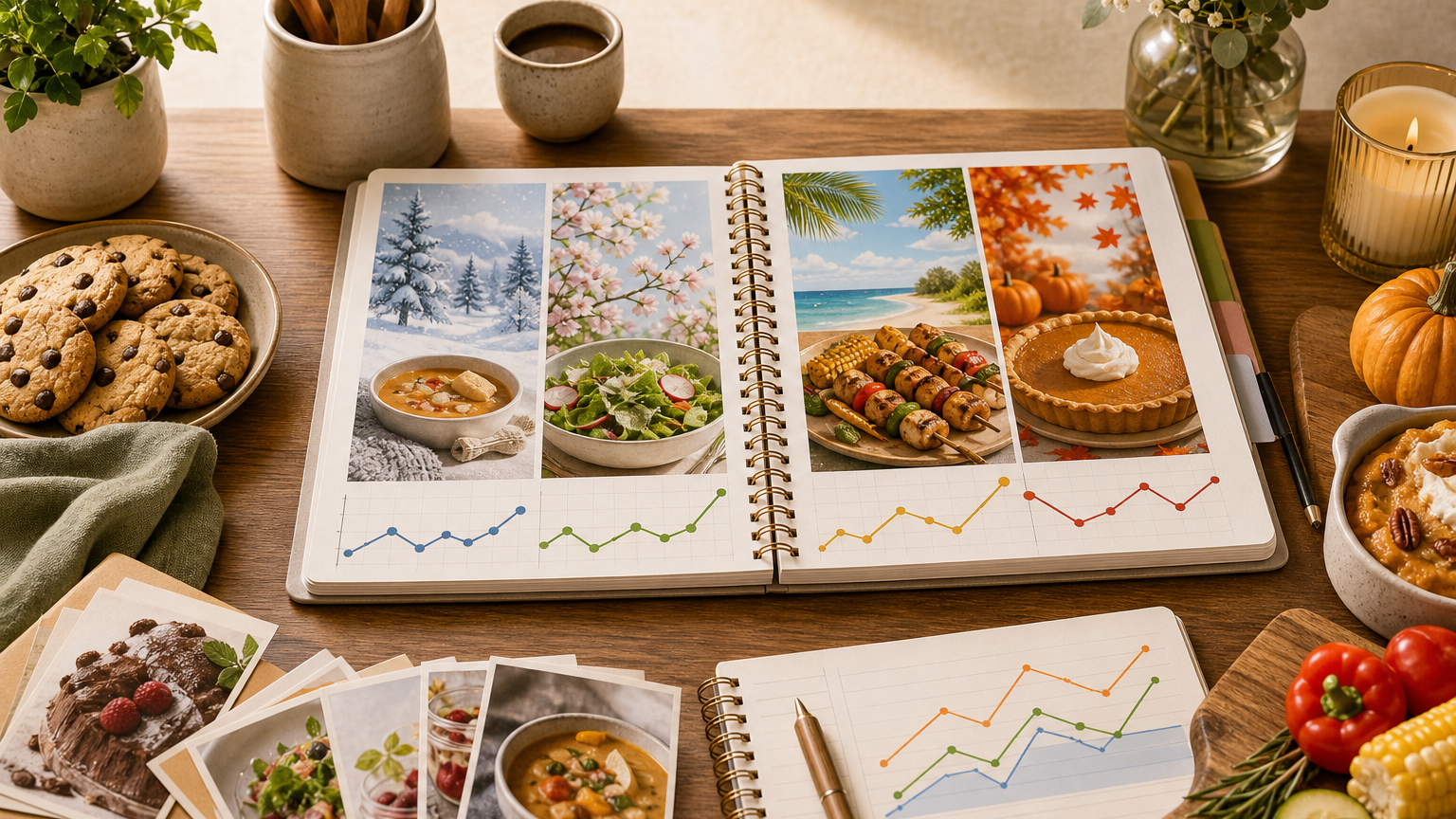
The broad pattern is familiar: January is often a weak ad month, spending generally strengthens as quarters progress, and Q4 is typically the most valuable period. Mediavine attributes these shifts to advertisers adjusting budgets around consumer behavior, shopping seasons, economic conditions, elections, and quarterly goals. Source
The start of the year can be especially jarring after holiday results. Advertisers have just spent heavily in Q4, then reset plans and budgets. Mediavine reports that January typically has the lowest CPM and fill rates, while November and December see strong demand around events including Halloween, Black Friday, Cyber Monday, Christmas, and New Year's. Source
Food blogs can feel this cycle sharply because the content naturally overlaps with entertaining, baking, gifting, holiday meals, and seasonal shopping intent.
- Q1: Expect a post-holiday reset, especially in January.
- Spring: Watch for steadier demand as campaigns build.
- Summer: Evaluate results against last summer, not only the preceding month.
- Q4: Prepare for the year’s strongest advertiser competition and holiday traffic opportunities.
Use seasonal content as a revenue planning tool
You cannot control advertiser budgets, but you can make sure your strongest seasonal pages are ready when readers and advertisers arrive. That means updating proven recipes before the season starts, checking photos and instructions, and making the page genuinely useful for the occasion it serves.
Think beyond the biggest holidays. Readers search for game-day food, graduation desserts, barbecue sides, back-to-school dinners, fall baking, Thanksgiving menus, and party appetizers at different points of the year. Build a calendar around the occasions that fit your site rather than chasing every trend.
Start earlier than feels necessary. A Christmas cookie post needs time to be refreshed, crawled, discovered, and shared before December. The same is true for summer grilling content before Memorial Day or pumpkin recipes before peak fall interest.
- Refresh pages that have already earned seasonal traffic.
- Add helpful serving, storage, and make-ahead details.
- Create clear internal paths between Related Articles.
- Publish new seasonal recipes early enough to give them time to gain traction.
- Keep evergreen recipes in the mix so your traffic is not dependent on one season.
What to do when RPM drops
First, do not panic-edit every page or assume you need more ads. Compare the current month with the same month last year, then look at traffic source, audience geography, pageviews, and RPM separately. That gives you a better read on whether the change is seasonal or site-specific.
A seasonal drop is also a useful reminder to run the business on an annual view. High Q4 revenue is not simply a bonus. It may need to support quieter periods, content production, site maintenance, and your own income targets earlier in the year.
Use slower ad months for work that compounds: refresh core recipes, improve navigation, plan holiday content, test newsletter ideas, and review what performed last season. The goal is not to eliminate seasonality. It is to make it predictable enough that it does not dictate your decisions.
- Track monthly RPM beside the prior year’s RPM.
- Set budgets using a 12-month view, not a single strong month.
- Prioritize improvements that help readers in every season.
- Treat Q4 as a planned opportunity, not a guaranteed outcome.
- Keep publishing standards high when ad demand is lower.
Seasonality is part of running an ad-supported food blog. When you expect softer periods and prepare early for high-intent seasonal moments, RPM swings become easier to interpret and easier to manage. Focus on useful recipes, a healthy content calendar, and year-over-year trends rather than chasing every monthly change.
Start earning from your content today. Literally.
Join Trust Me, Try It today and start making money from your new and existing content.