Chuck Roast: The Ribeye Alternative
Author
Want to see more of my creations?
Tell Google you want to see more of my creations in your search results.
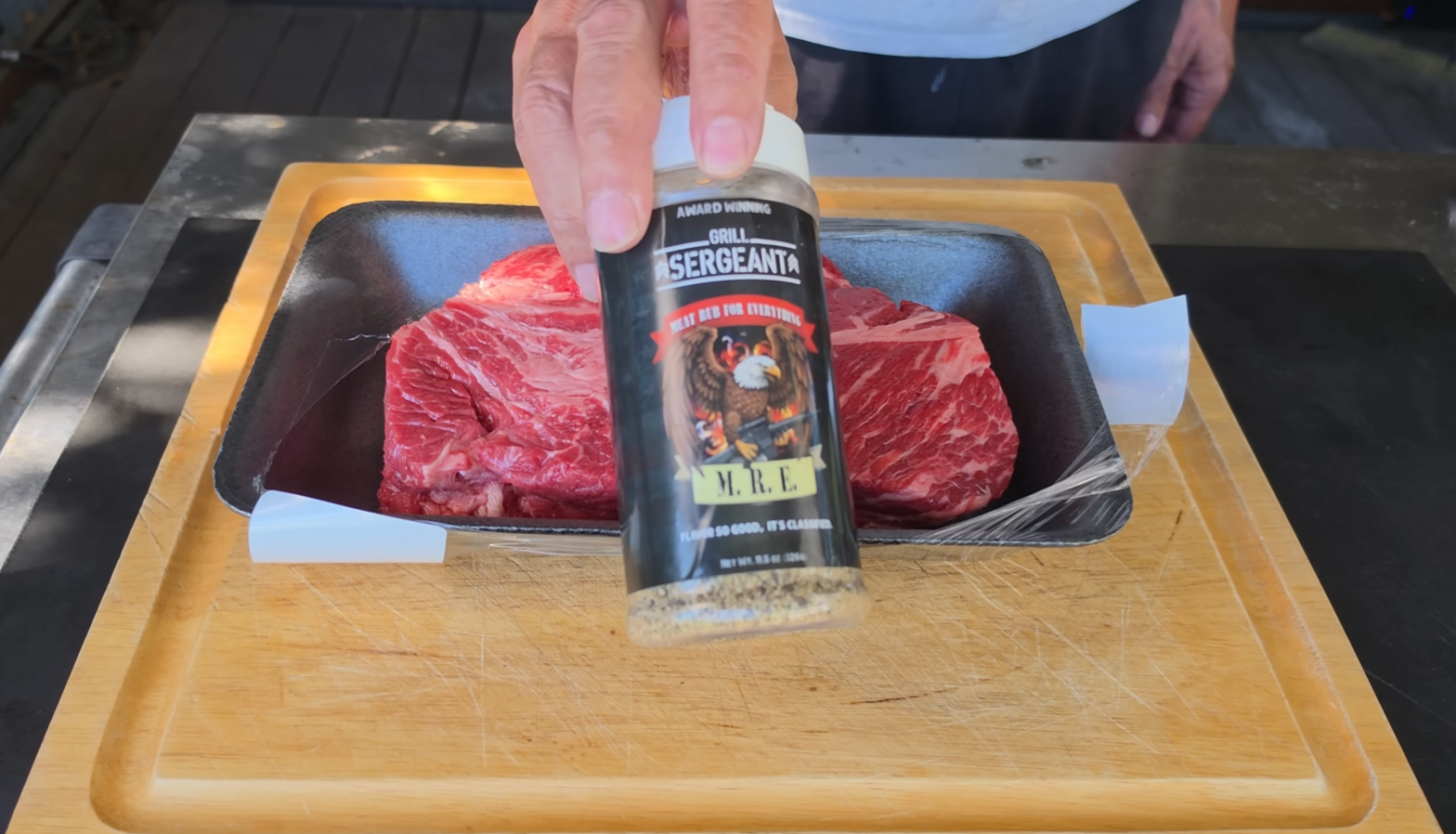
A thick, well-marbled chuck roast can eat a whole lot closer to a ribeye than most folks expect. This Chuck Roast: The Ribeye Alternative is my move when I want that rich beefy flavor, a smoky crust, and steakhouse-style slices without throwing ribeye money at the butcher counter.
More recipes from @thegalleryBBQ that you'll love
Watch How to Make It
The trick is treating it like a big steak instead of tossing it into a braise. We smoke it gently, pull it early, then give it a hot reverse sear until the outside turns dark, crusty, and downright dangerous around hungry people.
Why You'll Love This Recipe
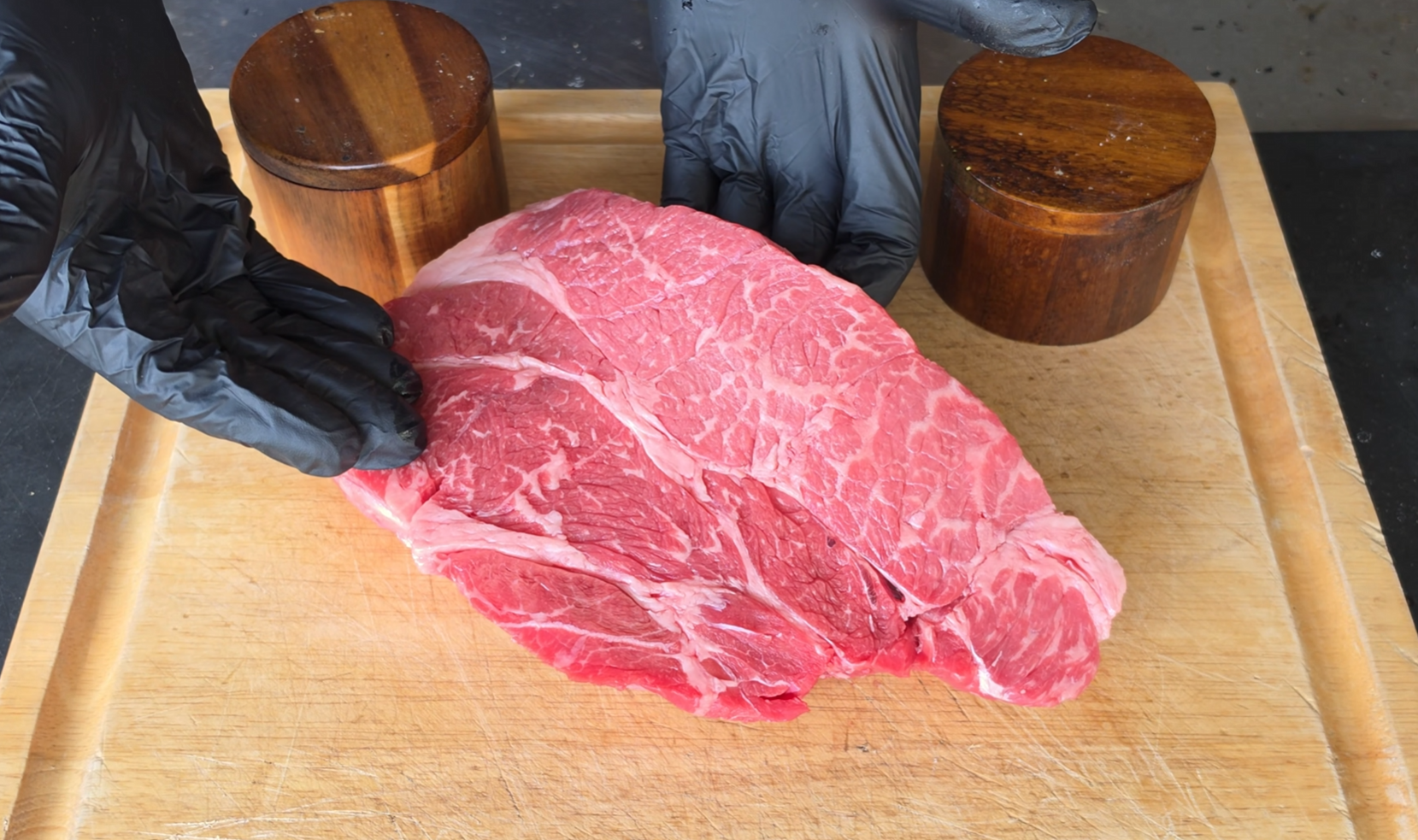
Chuck comes from the hardworking shoulder area, so it has serious beef flavor and plenty of connective tissue. For this cook, I look for a roast with generous white marbling running through the center, because that fat is what keeps the slices juicy and gives you that rich, ribeye-style bite.
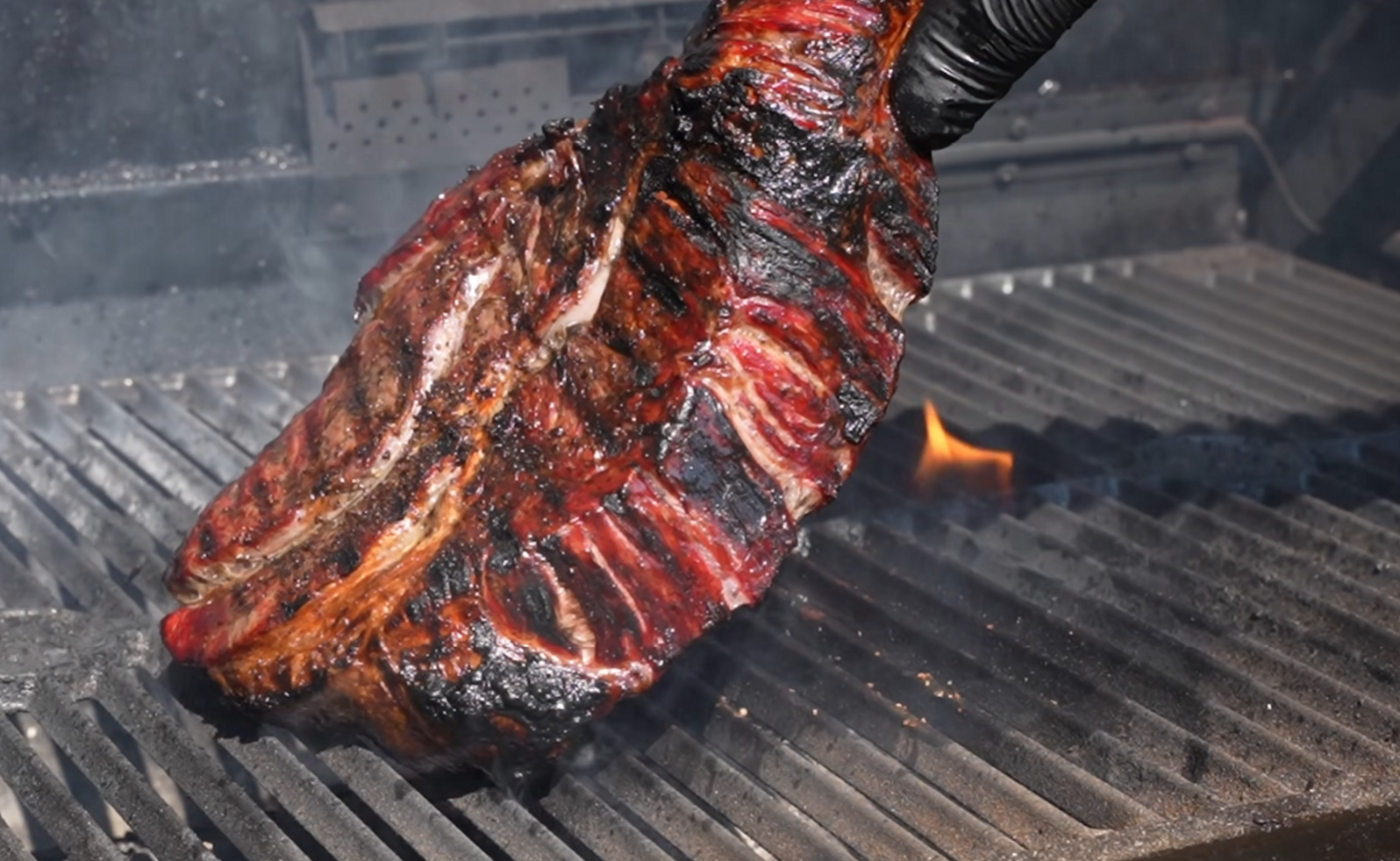
The low smoke followed by a blazing sear gives this roast two personalities. First it picks up that wood-fired aroma and a deep red smoke-kissed color, then it hits the flame and develops a crust with crackly pepper, rendered fat, and browned beef edges.
It is also a great cook for a crowd. Slice it into thick steak-sized portions and put it on a platter, and it disappears faster than a cold beer in July. You get the big presentation of a roast with the easy eating of grilled steak.
Ingredients & Tools You'll Need
You only need a few things here, which is part of the beauty of it. Grab one chuck roast that is about 1 1-2 to 2 inches thick and weighs 3 to 5 pounds, then keep the seasoning simple with kosher salt, fresh cracked black pepper, and garlic powder.
I want visible marbling throughout the roast, not just a fat cap sitting on top. A chuck roast with thin streaks of fat woven through the meat will stay more tender during the smoke and give you those buttery little pockets that make ribeye such a favorite.
For tools, I use a smoker, a grill that can reach 500 degrees F, an instant-read thermometer or leave-in probe, tongs, and a cutting board. The thermometer is non-negotiable here because chuck roast thickness can vary a lot, and cooking by the clock alone is how a beautiful roast turns into a chewy disappointment.
How To Make It
This is a reverse sear cook, and that order matters. We are building smoke flavor first at a low temperature, then finishing hard over direct heat so the exterior browns without pushing the middle past your preferred doneness.
A chuck roast is not automatically tender just because it is cooked like steak, so the meat selection and internal temperature are doing most of the heavy lifting. Pick a richly marbled roast, stay patient during the smoke, and slice thinly against the grain at the end. Trust me, those three things make all the difference.
Preparation
Start by looking over the roast and finding the side with the best marbling. You want the meat to look well-fed, with little white ribbons and flecks of fat running through it, rather than lean and solid red from edge to edge.
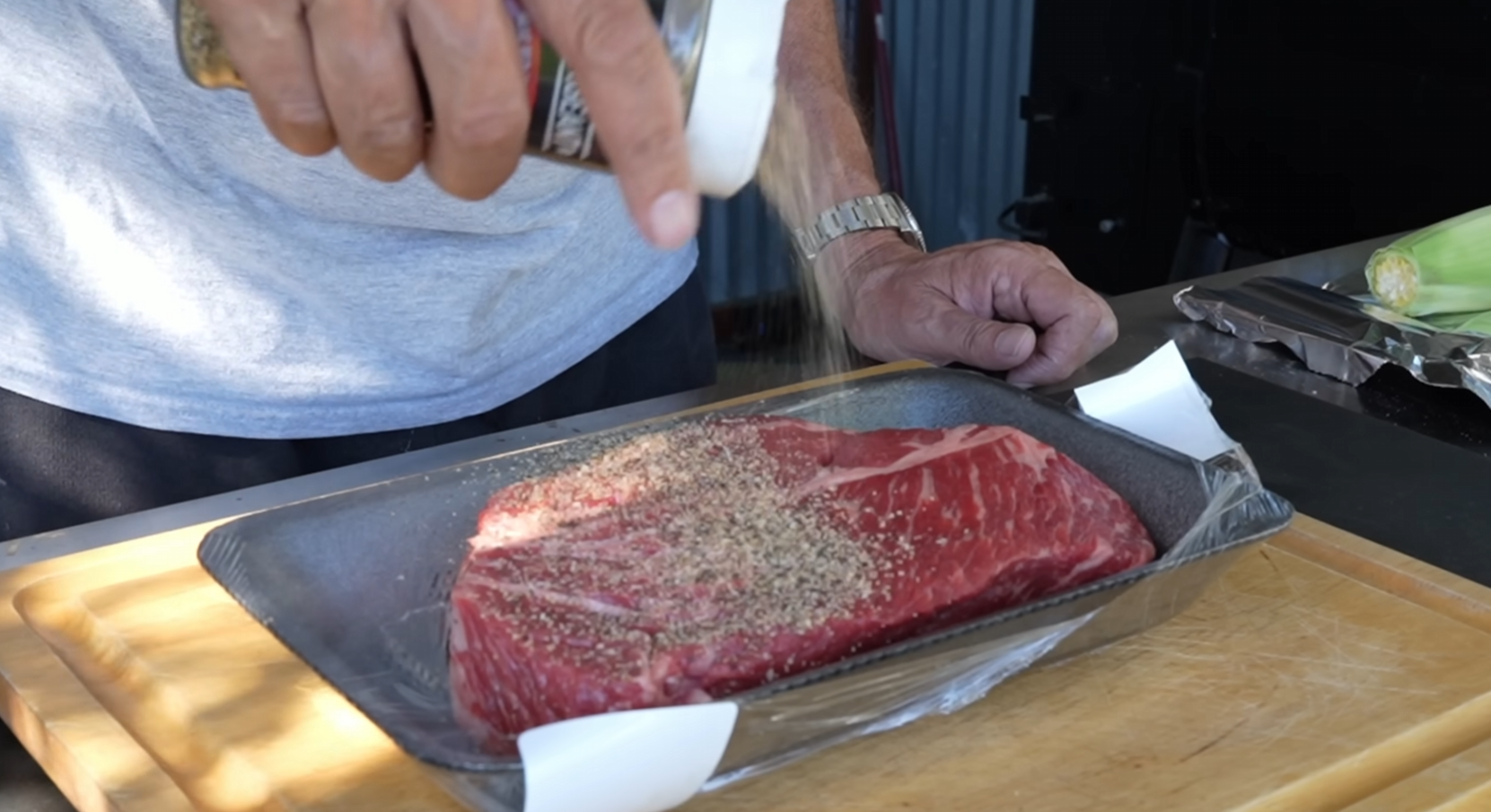
Season every side generously with kosher salt and fresh cracked black pepper, then add a light dusting of garlic powder. The pepper should be noticeable because it becomes part of that bold, dark crust later, but the garlic powder should stay in the background and support the beef instead of taking over.
Let the seasoned roast sit on a cutting board for 30 to 45 minutes before it goes on the smoker. It does not need to reach room temperature, but taking the hard refrigerator chill off helps it cook more evenly and keeps the outside from getting too far ahead of the center.
This is where most recipes go wrong: they treat chuck roast like a regular pot roast or cook it hot from the start, but I smoke it gently first so the beef takes on real wood flavor before the crust sets over high heat.
Cooking
Preheat the smoker to under 200 degrees F. Lower heat means the roast has more time in clean smoke, so you are looking for a thin, almost invisible stream of smoke instead of thick white clouds that can leave the meat tasting bitter.
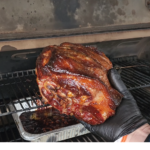
Put the roast on the smoker and let it cook until the center reaches 107 to 110 degrees F. The surface will slowly turn deeper red-brown, the seasoning will look dry instead of wet, and the roast will smell like toasted pepper, beef fat, and clean wood smoke.
Do not rush this stage by cranking the heat. The roast is ready for the grill when the outside has taken on color and the probe slides into the center with a little resistance, not a soft pot-roast feel. It is still rare inside at this point, and that is exactly what we want.
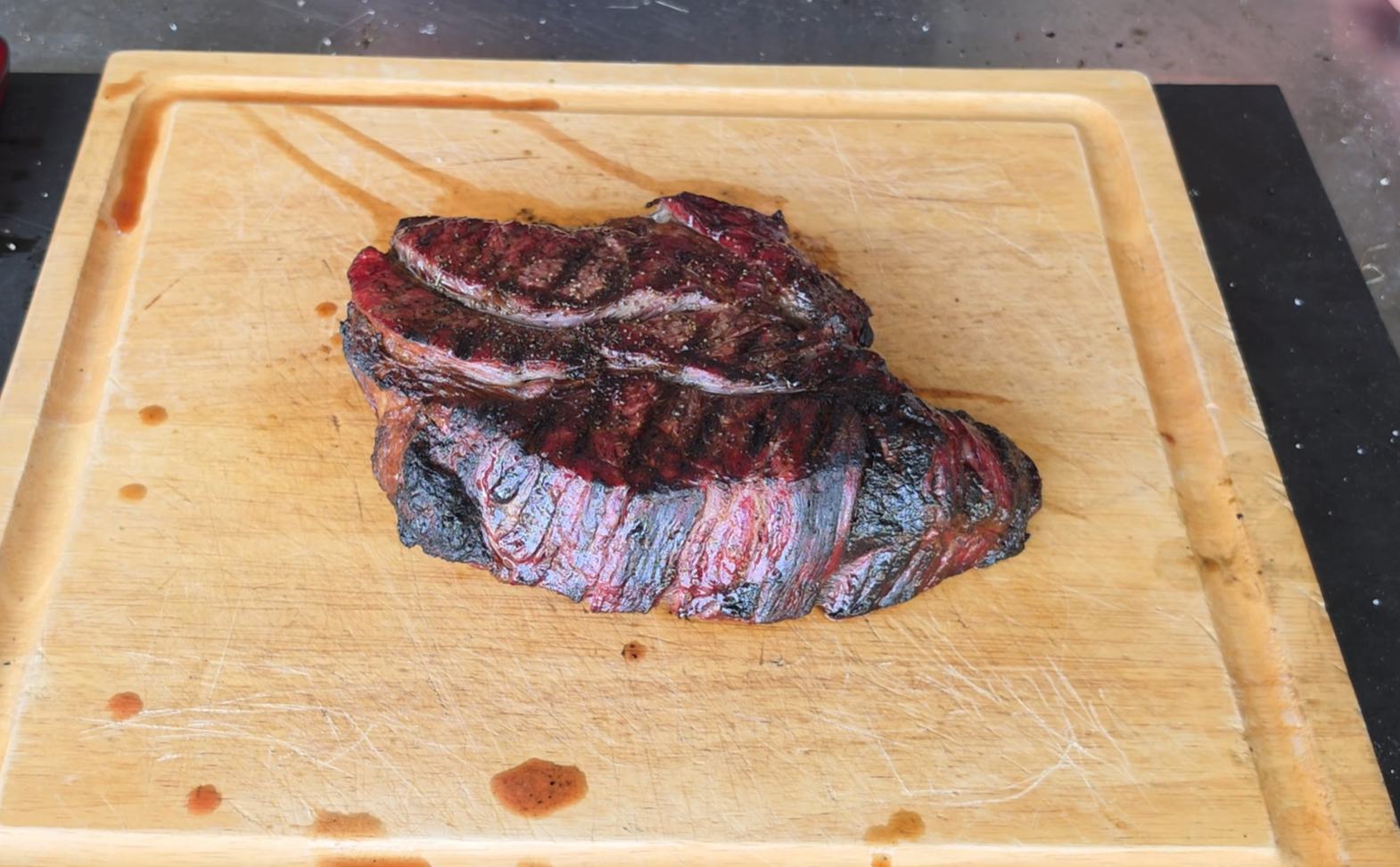
Pull the roast from the smoker and bring your grill up to 500 degrees F. Once the grates are screaming hot, place the roast directly over the flame and turn it frequently so every side gets a chance to brown without one spot burning black.
You should hear an aggressive sizzle as the fat hits the grate, and small flare-ups are normal. Keep moving the roast as needed, watching for a deep mahogany crust with dark charred freckles, not a dry gray exterior. The smell will shift from smoky to nutty and roasted as the fat renders and the pepper blooms.
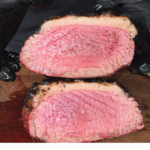
For rare, pull it at 120 to 125 degrees F. For medium-rare, which is my favorite zone for this cut, pull it at 125 to 130 degrees F. If you like medium, take it to 135 to 140 degrees F, but I would not push a chuck roast much past that if you are chasing that ribeye-style tenderness.
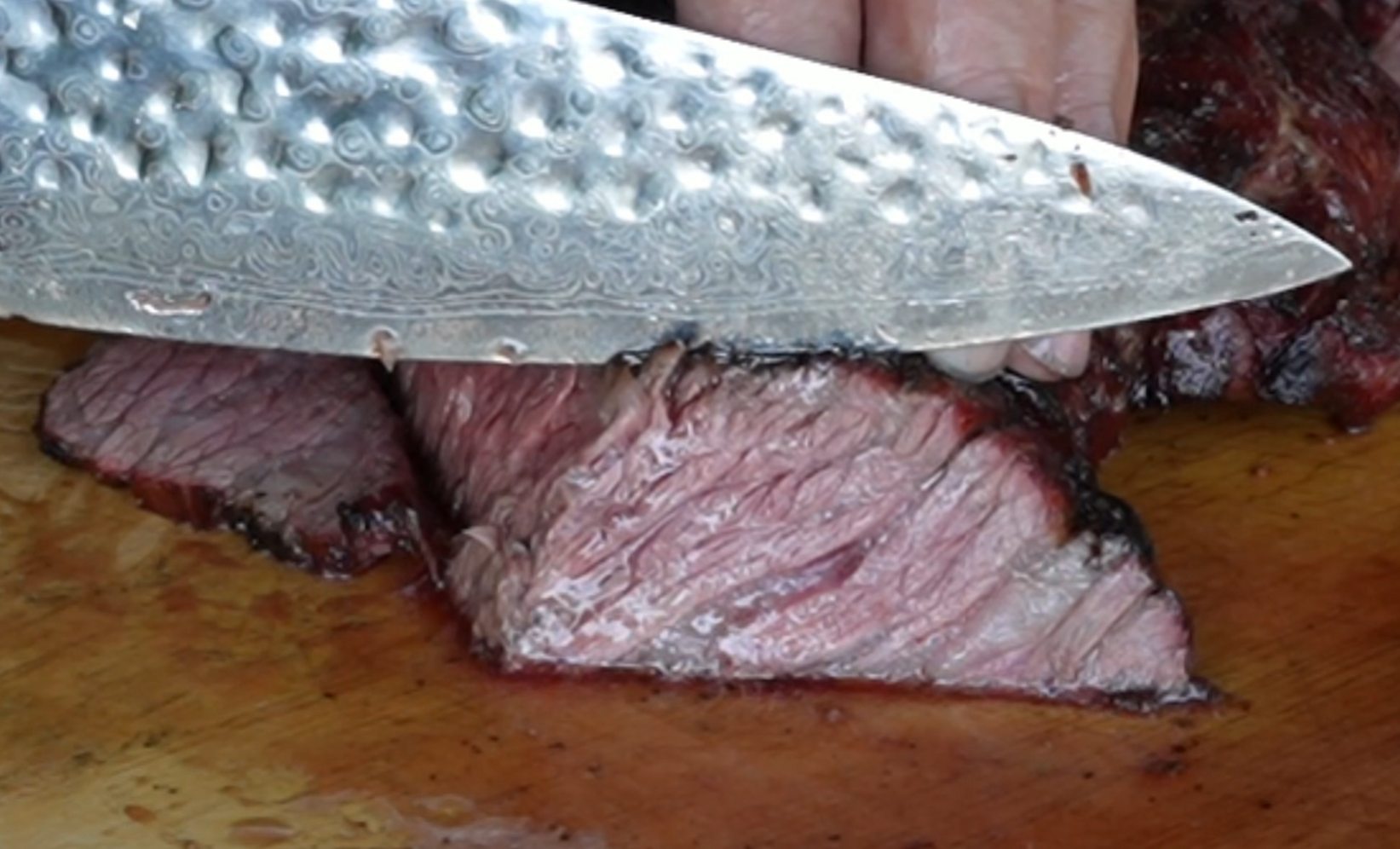
Rest the roast for 10 minutes before slicing. It should feel firm but springy when you press the center, and you will see juices settle instead of immediately flooding the cutting board. Find the direction of the muscle fibers and slice across them into steak-sized portions for the most tender bite.
Serving & Variations
I like serving this chuck roast hot off the cutting board while the crust is still loud and the slices have that rosy middle. Put the browned outside facing up on the platter so everyone sees what they are getting into, then let folks grab a thick slice or two.
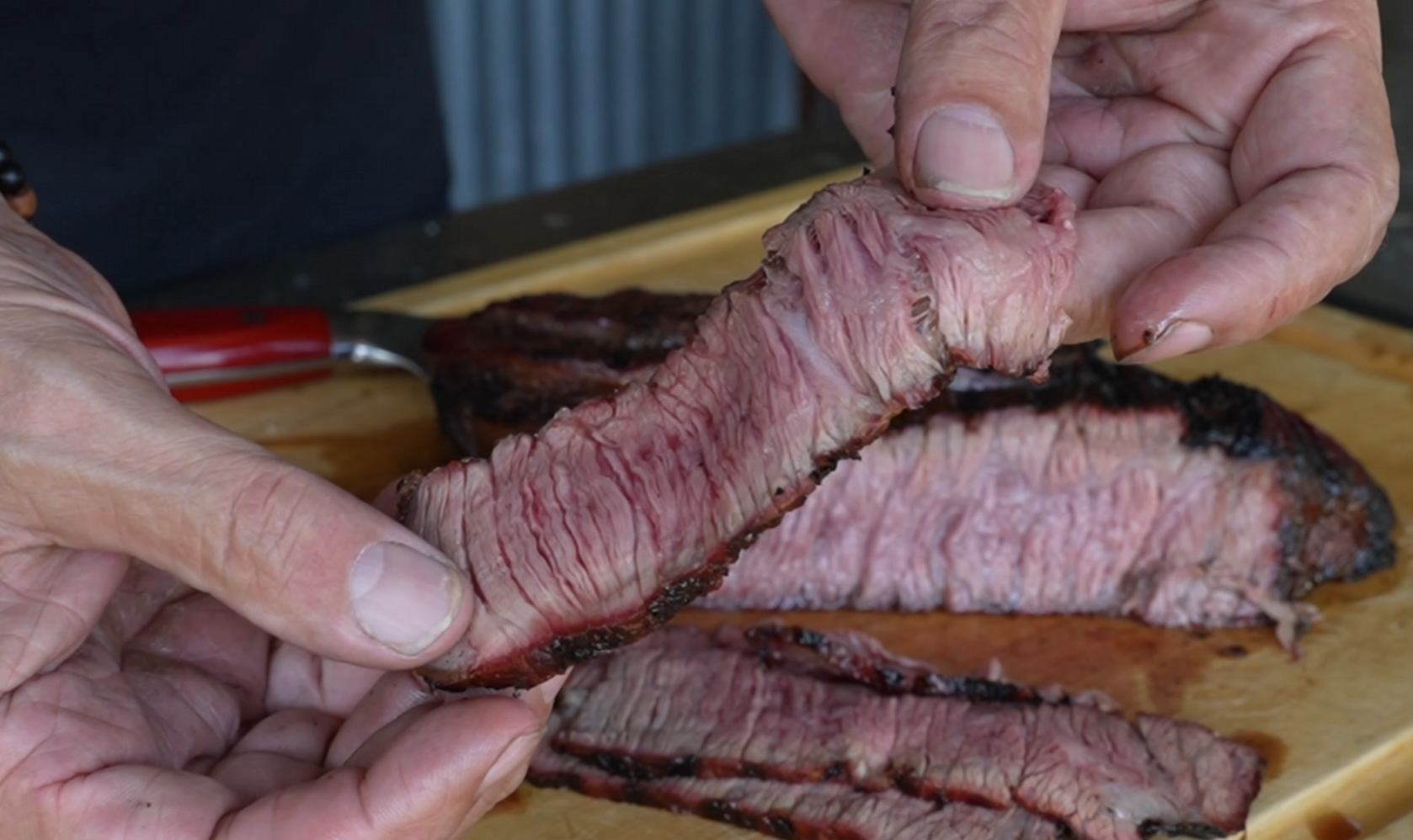
The common consensus among home cooks is that chuck eye and well-marbled chuck cuts are at their best around medium-rare, where the fat has started to soften but the beef has not tightened up. That matches my experience too – keep it pink, slice across the grain, and it eats far better than a roast taken too far.
My best pro-tip is to slice a small test piece from one end before slicing the entire roast. If that first slice feels a little firmer than you want, cut the remaining portions thinner, about the width of a pencil, and they will eat much more tender while still looking like proper steak slices.
If you have leftovers, keep the roast in larger unsliced pieces whenever possible. Reheat gently until just warm, then slice against the grain again. Thin cold slices are also pretty fantastic straight from the fridge, no shame in that backyard cook snack.
Chuck eye steak is a budget-friendly alternative to ribeye. It comes from the area next to the ribeye and has similar beefy flavor, marbling, and tenderness when cooked properly. Cook chuck eye steak quickly over high heat, just like a ribeye. Sear it in a hot skillet or grill for 3 to 5 minutes per side, depending on thickness, then rest it for 5 to 10 minutes before slicing. For medium-rare, remove the steak from the heat at 130F to 135F. For medium, remove it at 140F to 145F. The temperature will rise slightly while the steak rests. Chuck eye steak is usually slightly less tender than ribeye, but it can still be juicy and tender when not overcooked. Slice it thinly against the grain for the best texture.Frequently Asked Questions
What cut of beef can replace ribeye?
How should I cook chuck eye steak?
What internal temperature is best for chuck eye steak?
Is chuck eye steak as tender as ribeye?
Wrapping Up
This cook proves that a good chuck roast does not have to live its whole life in a slow cooker. With heavy marbling, low smoke, a hard sear, and a careful slice, you get a beefy, juicy steak experience that punches way above its price tag.
Keep an eye on that thermometer, do not skip the rest, and do not forget to cut across the grain. Once you nail that crust and see the pink center, you will understand why this one earns a regular spot in my backyard rotation.
Recipe created by @thegalleryBBQ for Trust Me Try It.
Even more from @thegalleryBBQ
Ingredients
- 1 chuck roast, 1 1/2-2 inches thick 3-5 lb
- Kosher salt
- Fresh cracked black pepper
- Garlic powder
Instructions
- Pick the Right Chuck: Look for a chuck roast with plenty of marbling and good fat throughout. The more intramuscular fat, the more it will resemble the richness of a ribeye.
- Season: Generously coat all sides with kosher salt, fresh cracked black pepper, and a light dusting of garlic powder.
- Let the roast rest on a cutting board for 30-45 minutes to take the chill off before cooking.
- Smoke Low and Slow: Preheat your smoker to under 200°F. The lower the temperature, the more smoke flavor you’ll develop.
- Place the chuck roast on the smoker and cook until the internal temperature reaches 107-110°F.
- Reverse Sear: Remove the chuck roast from the smoker and increase your grill temperature to 500°F.
- Once the grill is hot, place the roast directly over the flame. Sear all sides, turning frequently, until a deep crust develops and the internal temperature reaches your preferred doneness.
- Rare: 120-125°F
- Medium-Rare: 125-130°F (recommended)
- Medium: 135-140°F
- Rest & Slice: Remove from the grill and let the meat rest for 10 minutes.
- Slice against the grain into steak-sized portions and enjoy one of the best-kept secrets in BBQ-a budget-friendly cut that rivals a ribeye for a fraction of the price.