Pulled Ham: Better Than Pulled Pork, Here’s Why
Author

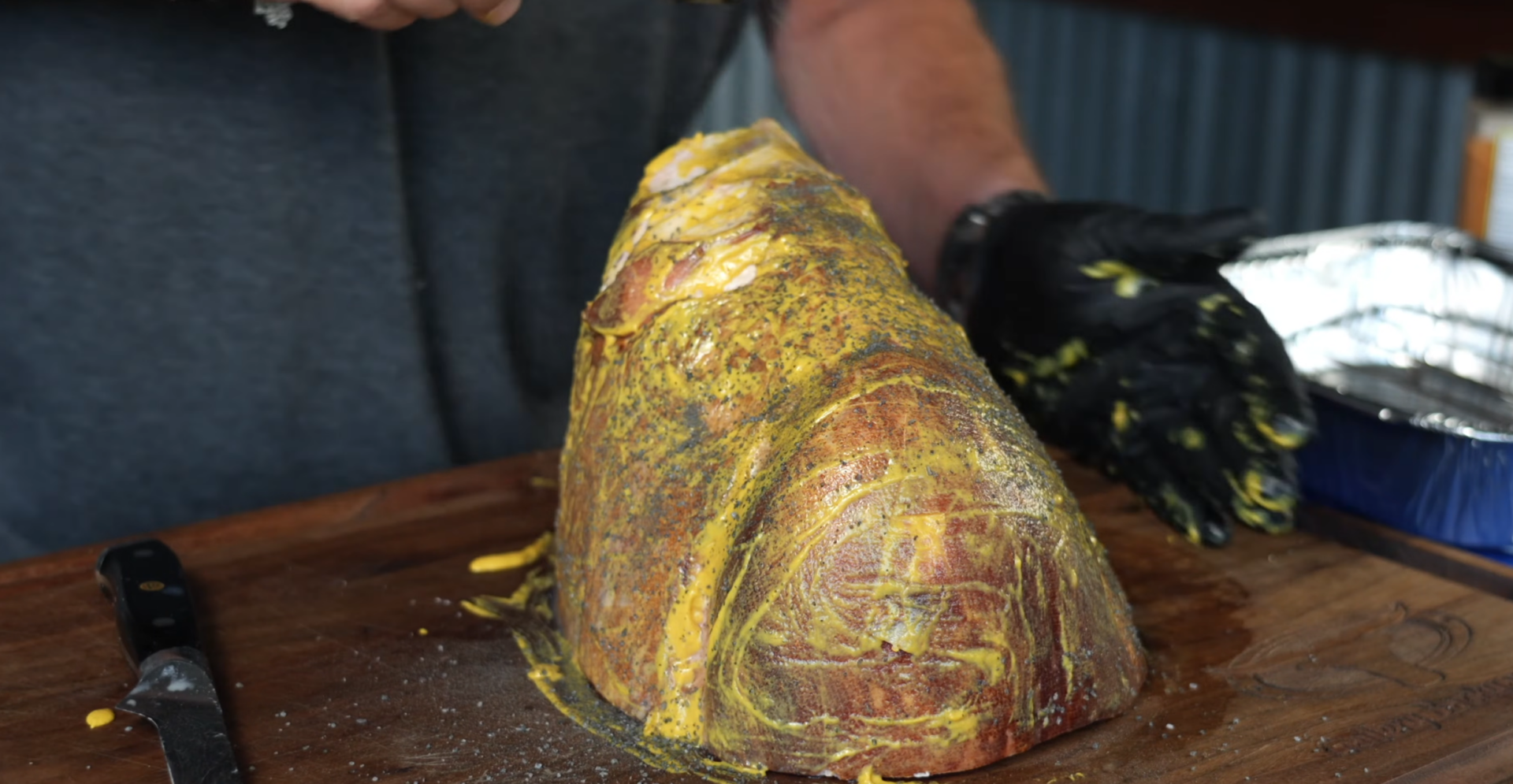
Pulled ham is the backyard move I make when I want all the smoky, shredded barbecue goodness of pulled pork with a richer, saltier, sweet-smoke personality. It starts with a whole ham, takes on smoke like a champ, and turns into tender piles of meat that disappear faster than a cold beer in July.
More recipes from @thegalleryBBQ that you'll love
Watch How to Make It
The big difference is that ham already brings cured flavor to the party, so every bite tastes deeply seasoned without needing a mountain of sauce. We are taking it well beyond a sliceable holiday ham here – low smoke, a sticky hot honey finish, pineapple juice, and enough time to make that bone slide right out.
If you have only had ham carved in neat slices, trust me on this one. Once it is shredded into those smoky, juicy strands and tossed with the foil juices, you will understand why this deserves a spot next to every pulled pork sandwich you have ever loved.
Why You'll Love This Recipe
I love this cook because it gives you two things pulled pork cannot always deliver – that unmistakable cured ham flavor and a seriously bold bark. The mustard helps the rub hang on, the smoke darkens the outside, and the final wrapped stage turns everything beneath that crust soft, sticky, and pull-apart tender.
It is also a great overnight smoker recipe. I can get the ham seasoned and rolling at 200 degrees, let the smoker do its thing, then come back when the outside has turned a deep mahogany color and the kitchen starts smelling like sweet wood smoke and ham heaven.
This is built for feeding people, too. Pile it on soft sandwich rolls, serve it beside baked beans and slaw, or spread it out on a big platter for folks to pick at while they circle the grill. It is familiar enough for traditional ham fans but different enough that somebody will absolutely ask what you did to it.

Get @thegalleryBBQ’s Latest Creations
Subscribe to get new content from @thegalleryBBQ delivered to your inbox.
Ingredients & Tools You'll Need
For the ham itself, I use yellow mustard as a thin binder, then season with kosher salt, coarse ground black pepper, and optional granulated garlic. You can also use your favorite ham rub, and I lean toward one that is not loaded with sugar since the hot honey and pineapple juice bring plenty of sweetness later.
You will also need hot honey and pineapple juice for the finishing stage. The hot honey gives the salty ham a little kick and a glossy top layer, while pineapple juice adds brightness and keeps the shredded meat tasting juicy instead of heavy.
For tools, grab paper towels, a sharp knife for scoring, a rack and tray, heavy-duty aluminum foil, and a reliable instant-read thermometer. I use my Z Grills smoker for this cook, but any smoker that can hold steady temperatures will get you there. A pair of heat-safe gloves or sturdy meat claws also makes the shredding job way less messy.
How To Make It
The game plan is simple. You are going to build flavor in the pot, then let everything simmer until it is tender and cozy.
I like to keep things moving as I go, so nothing sticks and every bite gets a little bit of everything.
Preparation
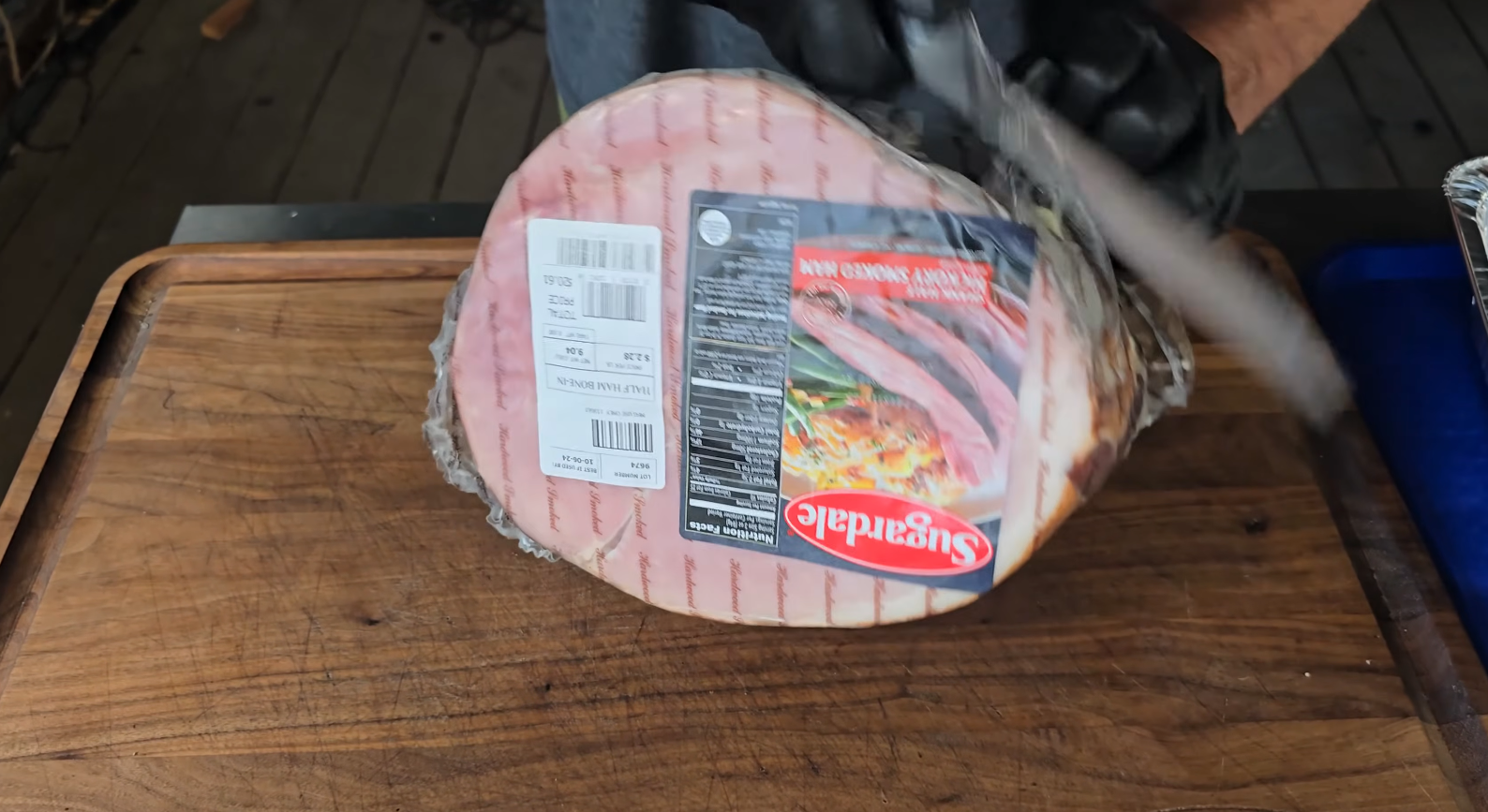
Start by taking the ham out of the packaging and patting every surface dry with paper towels. Moisture on the outside can make the seasoning slide around, and dry meat gives you a much better shot at that deep, flavorful bark we want.
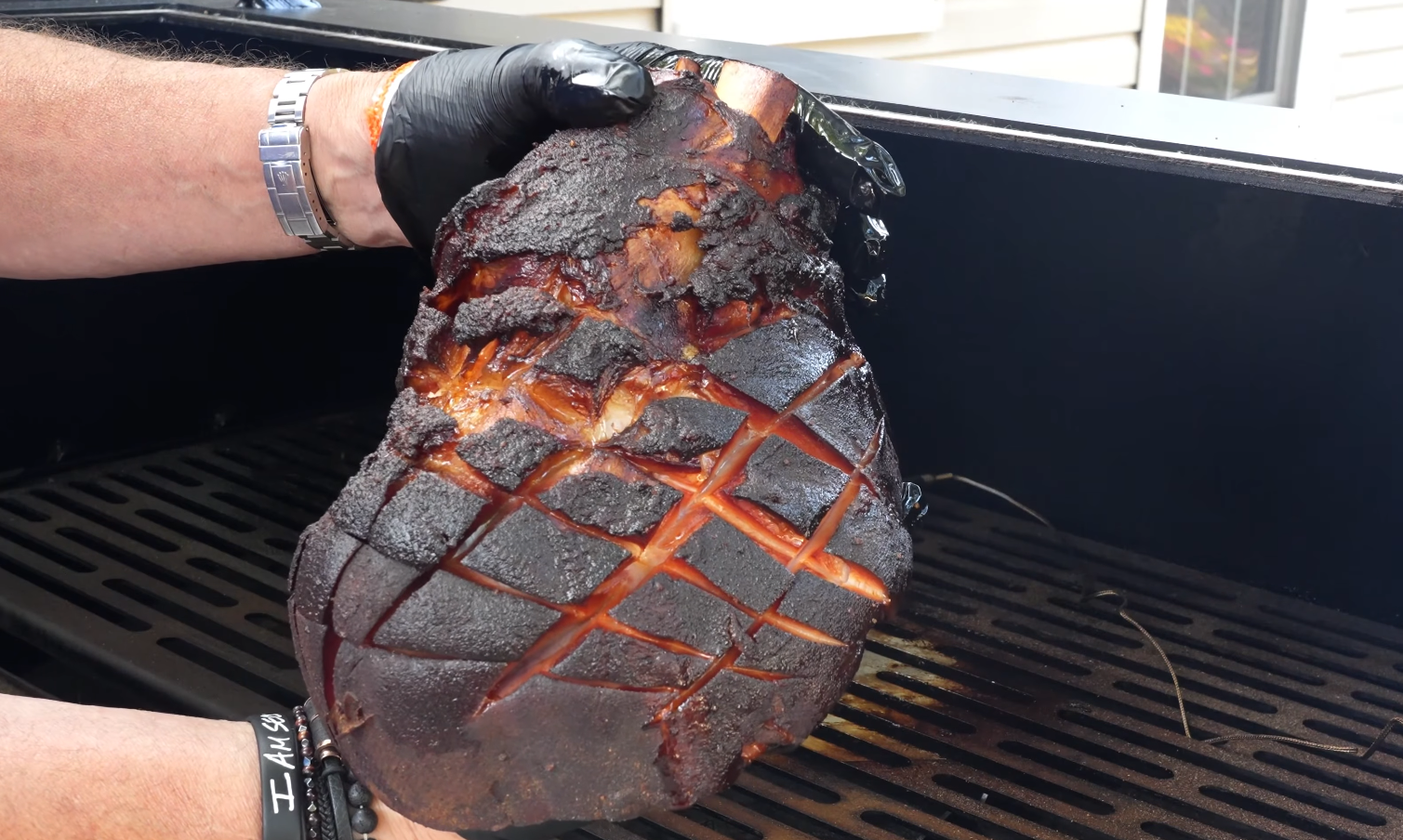
Use a sharp knife to score the surface in a crisscross pattern. Do not cut wildly deep into the meat – you are opening up the outside so the smoke, rub, hot honey, and glaze ingredients can work into all those little lines instead of sitting only on top.
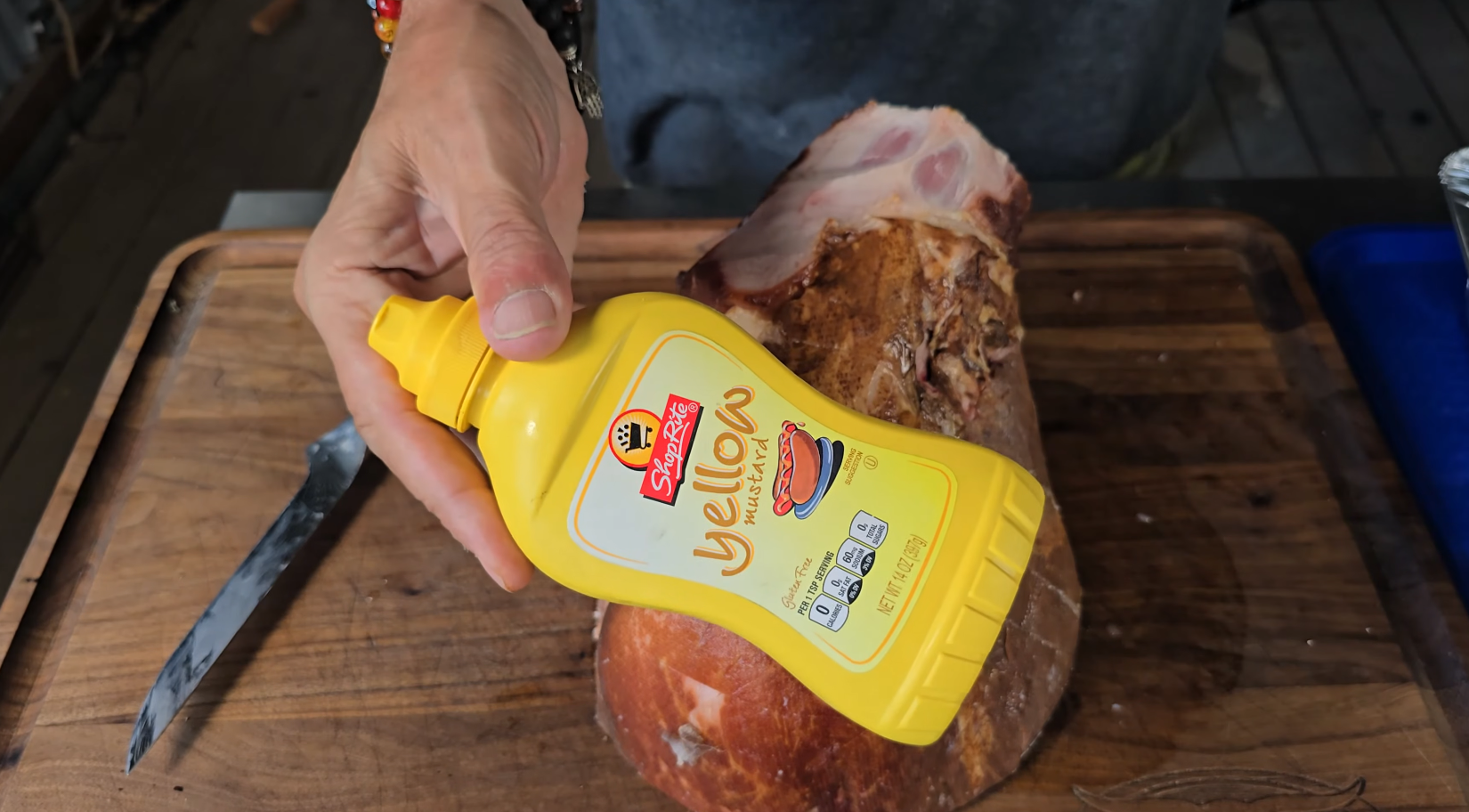
Spread a thin coat of yellow mustard over the entire ham. You should not see a thick yellow layer when you are done – it is just there to help the seasoning stick, and the finished ham will not taste like mustard.
Coat the ham generously with your salt, coarse black pepper, and optional granulated garlic, or use your favorite low-sugar ham rub. Set it on a rack inside a tray and let it rest at room temperature while the smoker heats to 200 degrees. That short rest lets the seasoning grab on while you get everything else ready.
This is where most recipes go wrong – they treat ham like a quick reheated holiday centerpiece and stop while it is still sliceable. I keep smoking and then wrap it with moisture until the connective tissue relaxes enough for true barbecue-style shredding.
Cooking
Place the seasoned ham on the smoker at 200 degrees and let that gentle smoke start building flavor. This is a long cook, often around 13 to 14 hours before the refresh stage, so it is a great one to start overnight if your smoker holds temperature reliably.
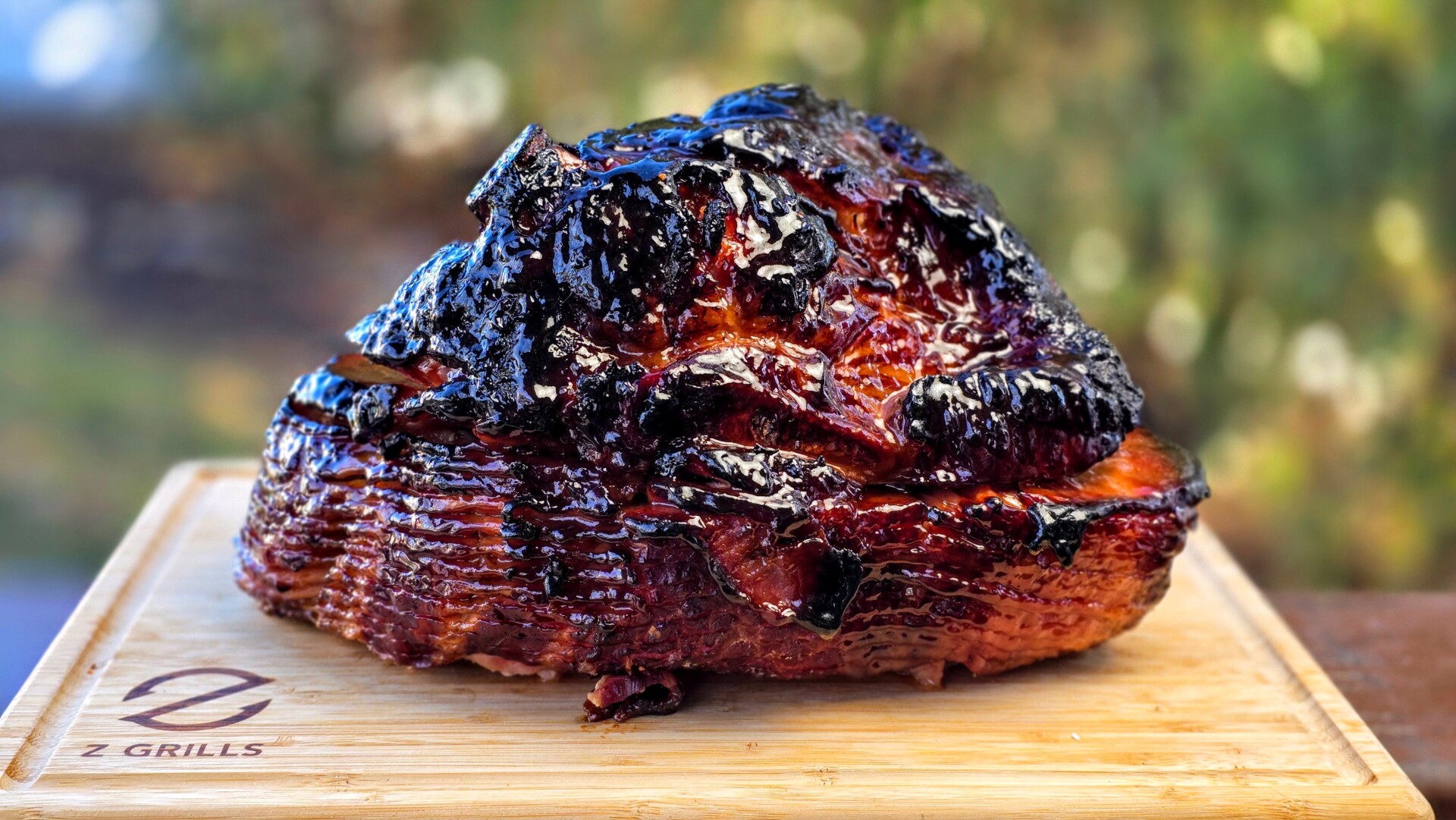
As it cooks, the outside will go from pale and dry-looking to darker red-brown, then into a rich mahogany shade with seasoning that looks set instead of wet. You should smell clean wood smoke and savory ham, not harsh smoke. If your smoker is putting out thick, bitter white smoke, get that airflow sorted before it muddies up the meat.
When the internal temperature reaches about 140 to 150 degrees, lightly spritz the ham with water and rotate it a quarter turn for even cooking. The surface should look bronzed and firm but not burnt, with scored lines that have opened slightly and caught the seasoning.
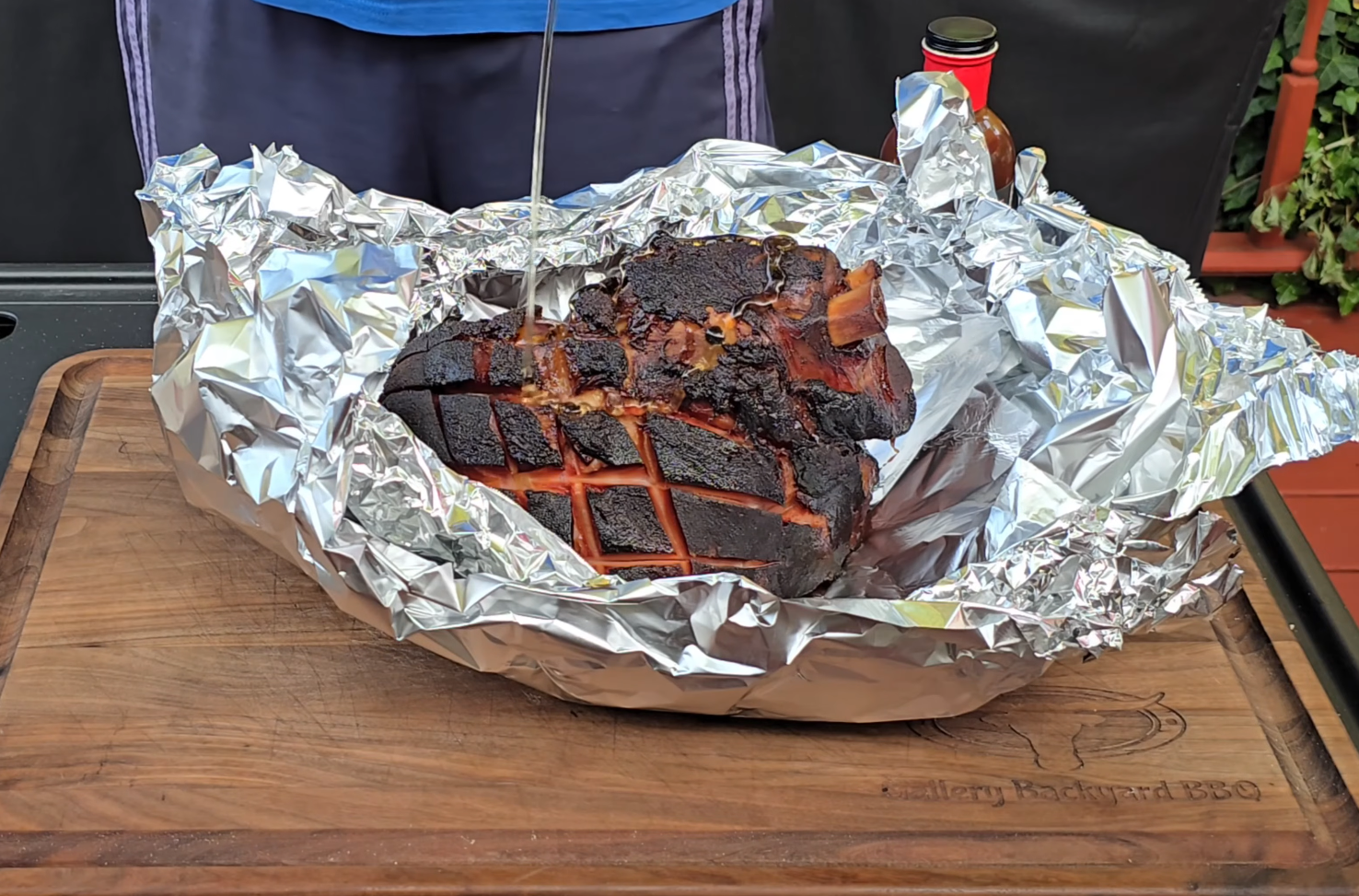
Now drizzle hot honey over the top, add a light dusting of rub, and pour pineapple juice over the ham. The honey will begin to shine and the pineapple juice will hiss softly when it hits the hot surface – that is the sweet, savory layer we are after.
Wrap the ham tightly in heavy-duty foil, making sure the seams are sealed well enough to hold every drop of juice. Return it to the smoker and raise the temperature to 280 to 300 degrees. Keep cooking for roughly another 3 1/2 to 4 hours, but watch the feel of the meat more than the stopwatch.
At around 208 degrees internal temperature, probe the ham in several spots. The thermometer should slide in with very little resistance, almost like pushing into warm butter, and the bone should feel loose when you gently wiggle it. That is your sign that it is ready to pull, not just carve.
Let the wrapped ham rest for about 15 minutes before opening it. Be careful when you peel back the foil because those juices are hot and packed with flavor. Remove the bone, shred the ham into chunky strands, then fold all that smoky meat back through the juices in the foil.
Serving & Variations
My favorite way to serve pulled ham is on soft sandwich rolls with a crunchy slaw and pickles. That cool crunch balances the rich, sweet meat perfectly. It also works great with macaroni and cheese, potato salad, baked beans, cornbread, or a pile of grilled vegetables if you are trying to pretend we are being responsible.
A common consensus among home cooks is: skip a sauce-heavy approach at the start and let the ham, smoke, and collected juices do the heavy lifting. I agree completely – serve barbecue sauce on the side if you want it, but taste the shredded ham first because it is already loaded with flavor.
Here is my pro-tip – after shredding, spread the pulled ham in a shallow foil pan, spoon only enough reserved juice over it to keep it glossy, then leave it uncovered in the smoker for 10 minutes at 300 degrees. The edges pick up a few caramelized, slightly chewy bits while the center stays juicy, giving you a texture pulled pork does not usually have.
Leftovers keep well in an airtight container in the fridge, especially if you save a little of the foil juice with them. Reheat it gently in a covered pan with a splash of those juices so the meat steams back to life instead of drying out. And if you have any left, which is a big if, toss it into breakfast hash, grilled cheese, or scrambled eggs.
This is not your average ham dinner. It is smoky, salty, sweet, peppery, and tender enough to make a pile of sandwiches feel like a full-on barbecue event. The low smoke gives it character, the wrapped finish makes it pullable, and those juices bring every shred together.
Give the ham time, trust the thermometer and the probe feel, and do not forget to mix that meat back into the foil juices. That is the part that turns a good smoked ham into something your crew will be talking about long after the plates are cleared.
Recipe created by @thegalleryBBQ for Trust Me Try It.
Pulled ham has a unique flavor and tenderness that can be more enjoyable for those who prefer the taste of ham over pork. The seasoning and cooking method can also enhance its taste, making it a delicious alternative. The cooking time for pulled ham typically ranges from 4 to 6 hours, depending on the size of the ham and the cooking method used. It is best to cook it low and slow for optimal tenderness. Yes, you can use various types of ham, such as smoked or honey-baked ham. Just be aware that the flavor profile may change slightly based on the ham you choose. Pulled ham pairs well with coleslaw, pickles, sandwiches, or even on a bed of rice. You can also serve it with BBQ sauce for added flavor. Absolutely! A slow cooker is a great option for making pulled ham. Just set it on low for about 6 to 8 hours and let it cook until it is tender and easy to shred.Frequently Asked Questions
What makes pulled ham better than pulled pork?
How long does it take to cook pulled ham?
Can I use a different type of ham for this recipe?
What should I serve with pulled ham?
Can I prepare pulled ham in a slow cooker?
Wrapping Up
Do not chase the clock alone with pulled ham. Every ham is a little different, and the real goal is a dark, set exterior before wrapping, followed by an internal texture so tender that the bone loosens and the meat breaks apart with barely any effort.
Even more from @thegalleryBBQ

Ingredients
- Yellow Mustard
- 1 CUP Kosher Salt
- 2 CUP Coarse Ground Black Pepper
- 1/4 Granulated Garlic(Optional)
- Or your favorite ham rub!
Instructions
- Remove the ham from its packaging and pat it completely dry with paper towels. Using a sharp knife, score the surface of the ham in a crisscross pattern to help the smoke, seasoning, and glaze penetrate the meat.
- Spread a thin, even layer of yellow mustard over the entire ham to act as a binder.
- Combine the kosher salt, coarse-ground black pepper, and granulated garlic in a small bowl. Generously season the entire ham with the rub.
- Place the ham on a rack set inside a tray. Let it rest at room temperature while you preheat your smoker to 200°F.
- Place the ham in the smoker and cook low and slow for approximately 13 to 14 hours, or until the internal temperature reaches 140 to 150°F.
- Lightly spritz the ham with water and rotate it a quarter turn. Drizzle hot honey over the top, add a light coating of the remaining seasoning, and pour a small amount of pineapple juice into the bottom of the tray.
- Wrap the ham tightly in heavy-duty aluminum foil, keeping it positioned in the tray to collect the juices.
- Increase the smoker temperature to 280 to 300°F. Continue cooking for another 3 1/2 to 4 hours, or until the internal temperature reaches approximately 208°F and the meat is fall-apart tender.
- Remove the ham from the smoker and let it rest, still wrapped, for 15 minutes.
- Remove the bone and shred the ham directly in the tray. Toss the shredded meat with the flavorful juices collected in the bottom.
- Serve on sandwich rolls, alongside your favorite barbecue sides, or on a platter for family-style pulled ham.
Want to see more of my creations?
Tell Google you want to see more of my creations in your search results.